Penalty kicks, pressure and performance: The psychology of elite sport
Ontario Tech University researcher Dr. Bryan McLaughlin explains how athletes develop the focus, resilience and confidence needed to excel in high-stakes moments
July 15, 2026
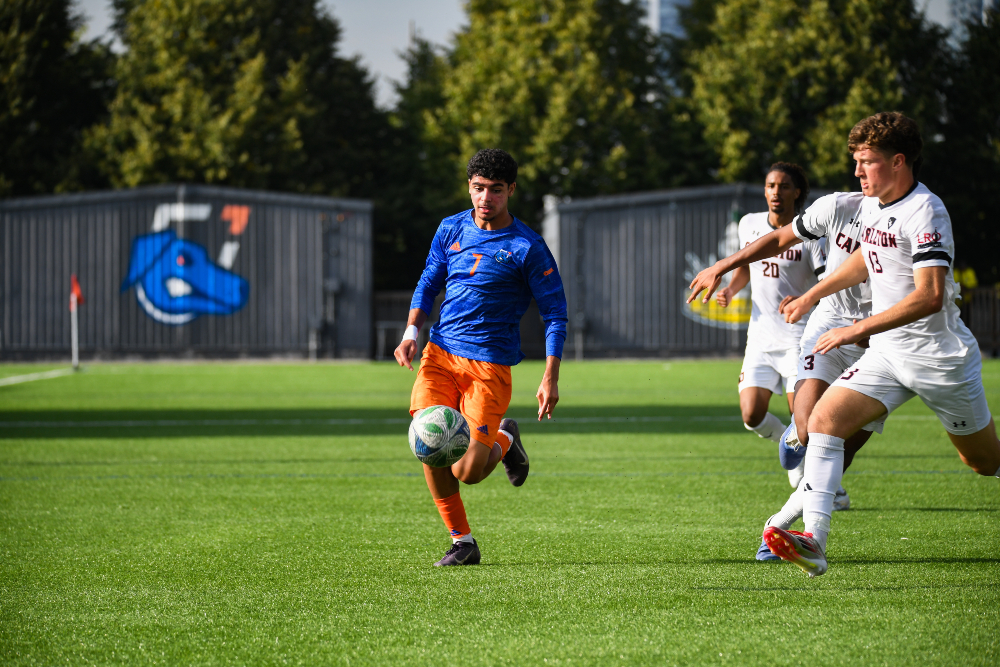
The Fédération Internationale de Football Association (FIFA) World Cup showcases some of the most talented athletes in the world. But beyond physical skill, an athlete's ability to manage nerves, maintain focus and make quick decisions can make the difference between victory and defeat in high-pressure moments.
Dr. Bryan McLaughlin, a postdoctoral fellow in Ontario Tech University’s Faculty of Health Sciences, studies talent identification and development, implementation science, and mental performance in sport. As a Certified Mental Performance Consultant®, he also works directly with athletes to help them develop the skills they need to perform their best.
Dr. McLaughlin shares his thoughts about the psychology behind elite performance, why some athletes thrive under pressure, and what lessons from sport psychology can be applied beyond the playing field:
Can you tell me about your research interests and the path that led you to your current role?
What drew me to this field is combining my love for sport with supporting athlete development.
My research area falls within talent identification and development, and applied sport psychology. Working with Dr. Nick Wattie in the Expertise and Skill Acquisition Lab, my PhD research focused on athlete ‘fit’: the degree of compatibility between an athlete and the environment they operate in. We created the first Athlete-Fit Tool (AFT), which helps assess perceptions of athlete fit. This is a novel contribution to the field of sport science, as coaches, athletes, scouts and decision-makers often discuss the importance of athlete fit, yet no measures previously existed to assess this concept. The AFT addresses that need.
My postdoctoral fellow role is funded by the Tanenbaum Institute for Science in Sport, which advances science, medicine and care in high-performance sport. Under Dr. Wattie’s mentorship and supervision, I developed the research and applied skills that are essential to my current work.
On the applied side, with the support of Dr. Wattie and former Athletics Director Scott Barker, I designed and implemented the first mental performance program at Ontario Tech for the varsity student-athletes.
Beyond physical skill, how much of success at the elite level comes down to mental performance, and what psychological skills separate the best athletes from the rest?
It is difficult to say with certainty how much success comes from mental performance. When people make statements that athletic performance is ‘all mental,’ or repeat the classic Yogi Berra saying, ‘Baseball is 90 per cent mental, and the other half is physical,’ that can do more harm than good. Psychology is important for performance, but it’s just one piece of the pie that can work for you or against you. Many great athletes perform well despite their mindset, while others perform poorly and have a great mindset.
One psychological skill that separates the best from the rest is self-regulation: the ability to manage your thoughts, emotions and behaviour to optimize your performance.
Why do athletes sometimes struggle in high-pressure situations like penalty kicks, and what strategies can help players perform when the stakes are highest?
There are many reasons why athletes might struggle with a penalty kick, and it’s difficult to say exactly why, without knowing what happens internally for both athletes involved. It could come down to lack of experience in those situations, or inconsistent performance routine.
Athletes who tend to handle these situations best are ones who have a consistent routine they return to regardless of what’s going on around them. They may incorporate a variety of mental skills (e.g. breathing, attention focus, imagery). The routine can help them focus on the process to execute a skill rather than thinking ahead to the potential outcome.
How can elite athletes manage immense pressure (e.g. expectations from fans, media and social media) without letting that affect their performance on the field?
They can plan for those external pressures ahead of time. One useful approach is to put things into perspective. Someone who has never performed at that level, under those conditions, does not have the same frame of reference as the athlete who spent years preparing for it. This is not to say external opinions are irrelevant, but it does mean they should not carry the same weight as the athlete’s own preparation, knowledge and feedback from trusted individuals who understand the nuances of performance. This is easier said than done, but building perspective into how an athlete thinks about these pressures ahead of time can help them when that moment arrives.
What are some techniques used by sport psychology professionals that everyday athletes, students or even employees could apply in their own lives?
Here are two I think are helpful for most people; to be effective, they’d need to be practised just like physical skills/training:
- Reframing: Shifting your perspective of a situation or challenge, so you can learn and move forward to your desired outcome, rather than letting one speed bump turn into a dead-end.
- Productive self-talk: This is different from the pop-psych approach of ‘think positively and everything will be great.’ That’s doesn’t always work, especially in challenging environments. Self-talk is the internal dialogue you have with yourself; it can be instructional or motivational, and sometimes when we make mistakes, this dialogue can quickly turn into a negative story about ourselves. Productive self-talk can be a way for us to remove the ‘positive’ or ‘negative’ label and focus on the dialogue that will help us perform despite our emotional state.
These tools work well together. For example, whether a soccer player misses a penalty kick, a student fails an exam, or an employee misses their promotion, these situations can create perceived setbacks. Reframing helps us view setbacks as opportunities to grow rather than something defining us. That shift makes productive self-talk easier as it can direct our attention to what’s useful rather than emotionally reactive.
1 > 1Gallery

More news



Ready for tomorrow’s careers.
We prepare our students for the fast-paced, ever-evolving world of technology.