
Harnessing AI and virtual reality to help memories come alive
Dr. Winnie Sun works alongside people living with dementia and their caregivers to design technologies supporting reminiscence, connection and well-being
November 10, 2026
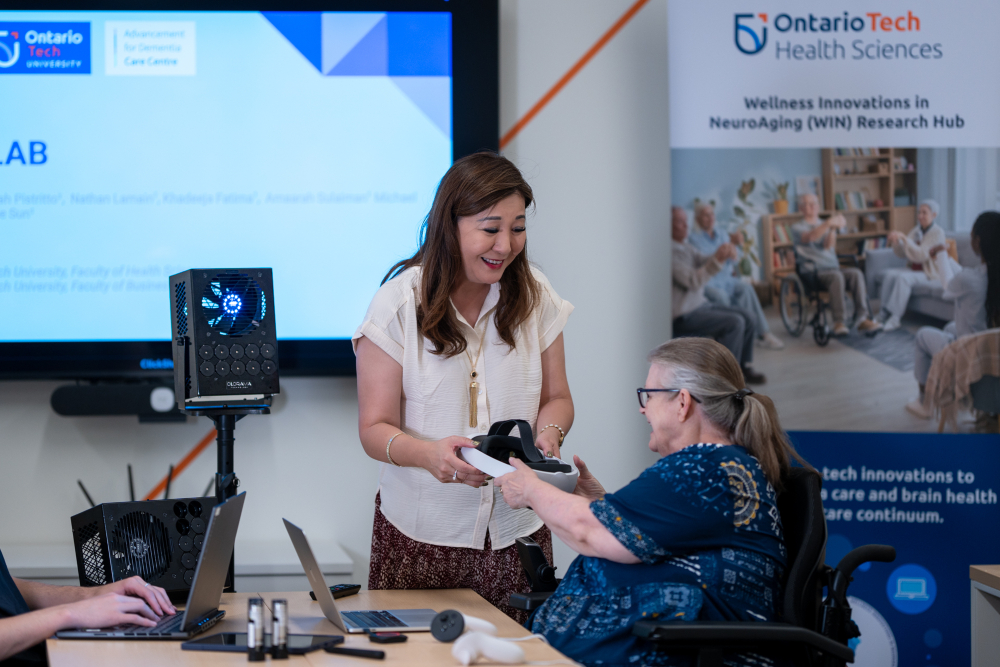
For people living with dementia, a familiar place, photo, song or scent can unlock memories that might otherwise seem out of reach. Ontario Tech University researcher Dr. Winnie Sun is exploring how artificial intelligence (AI), virtual reality (VR) and multisensory technology can help make those moments more accessible and easier to share with loved ones.
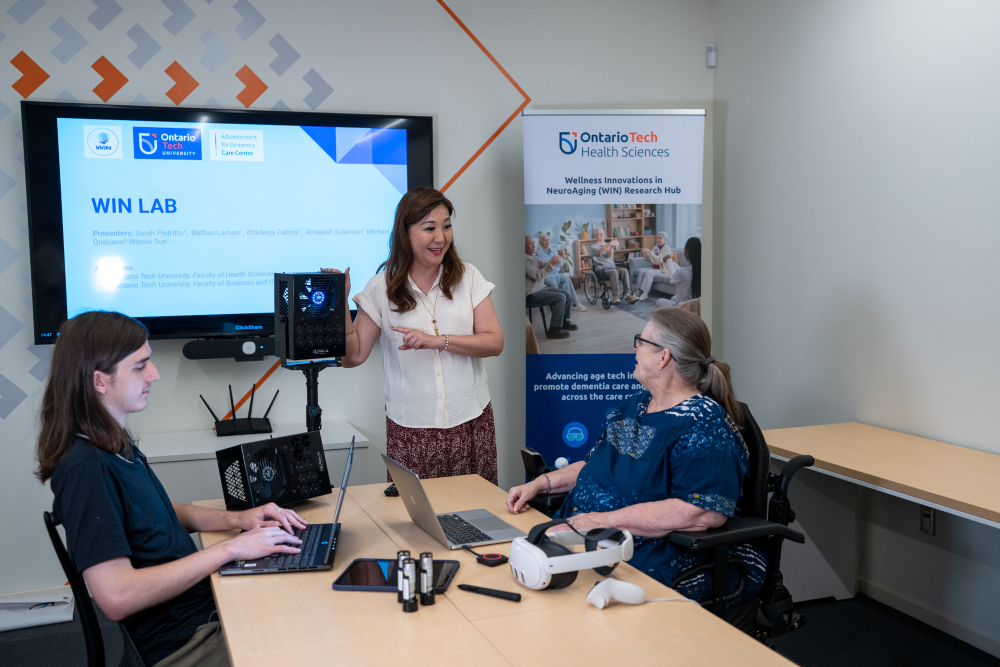
An Associate Professor in Ontario Tech’s Faculty of Health Sciences, Dr. Sun leads the Wellness Innovation in Neuro-Aging Lab (WIN Lab) and serves as Co-Research Director of the Advancement for Dementia Care Centre, a partnership between Ontario Tech and Ontario Shores Centre for Mental Health Sciences. She’s also Co-Scientific Director of Sienna Senior Living Research Centre for Healthy Aging and Happiness. Her work focuses on helping older adults and people living with dementia maintain quality of life, remain connected to their communities and access supports that enable them to live well as they age.
For several years, Dr. Sun has researched reminiscence therapy, a type of psychotherapy that helps people living with dementia recall past events through the use of prompts such as pictures, videos and sounds. Through her VR Memory Project, she has explored how VR can enrich those experiences. Now, she and her team have added a new ‘conversational AI’ component to the project, which generates human-like dialogue to encourage participants to talk about meaningful life experiences, and helps sustain conversations during reminiscence sessions.
“Because of the memory that can be evoked, reminiscence therapy really stimulates mental activity, cognitive function and also improves mental well-being and social connectedness,” Dr. Sun explains.
Creating immersive memory experiences
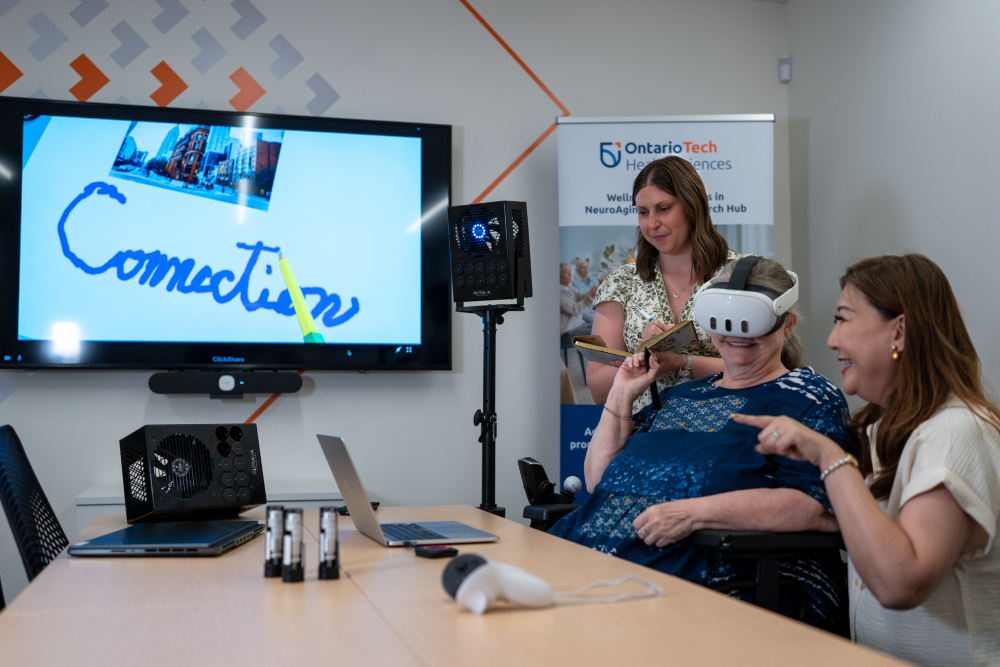
Wearing a VR headset, participants ‘step inside’ virtual environments tailored to their own experiences and interests, enabling them to revisit meaningful locations from childhood, explore favourite travel destinations or engage with cherished music and family photos. Dr. Sun’s research team is also incorporating additional sensory elements into the immersive session, including scent, to create richer and more authentic experiences.
The project's AI feature supports reminiscence sessions by encouraging discussion and reflection in order to promote caregiver relational and intergenerational connection. This is one of the team's key research goals, as many people living with dementia experience isolation and loneliness.
Collaboration across disciplines
The project draws on expertise from multiple disciplines across the university, including health sciences, engineering and game development.
Sarah Pistritto, PhD candidate (Health Sciences) and research team member, sees that interdisciplinary approach as one of the project's greatest strengths.
“When you put a bunch of collaborators together at a table, you're brainstorming and getting the best ideas out of everybody,” she says. “Through that shared knowledge, you're creating a great solution that’s more meaningful and useful for the people you're trying to support.”
Putting lived experience at the centre
The success of this research also depends on the active involvement of people directly affected by dementia, who help test and guide the technology as it evolves.
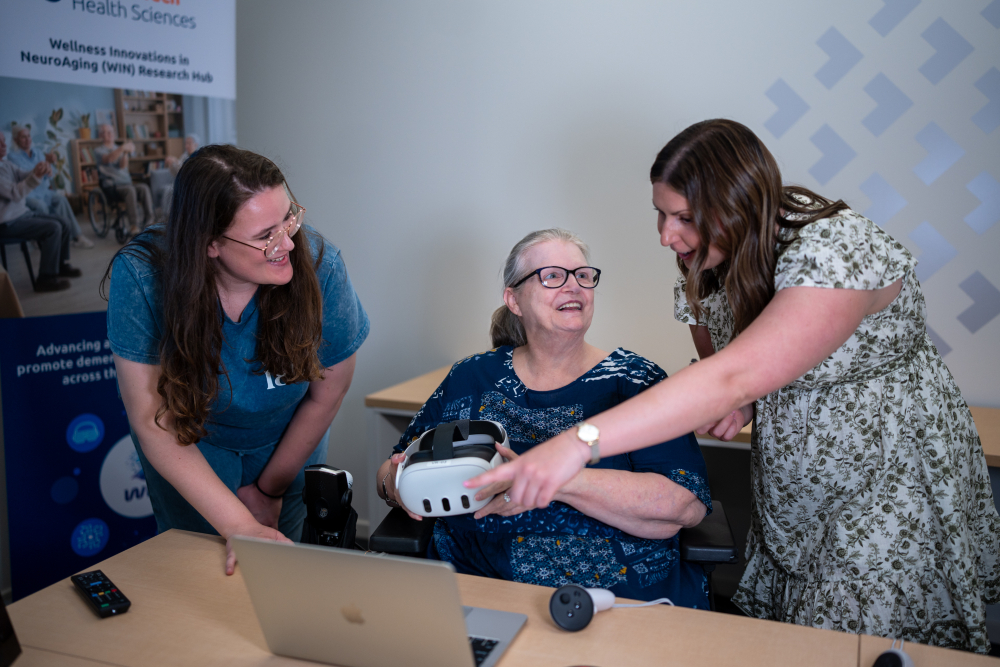
One of those collaborators is Bea Kraayenhof, a participant living with dementia who has worked closely with the research team. She recalls being surprised by how immersive the virtual experiences felt.
“It really does make you feel like you're right in there with everything you’re seeing,” she says. “It relaxed me. It was something I had never dreamed could be done.”
Beyond benefiting from the technology itself, she values being able to contribute to research that could help others living with dementia. “Working toward a better future with everyone is a wonderful feeling,” she says. “I feel fortunate that I could participate in this and, by the same token, have it help others out.”
For Dr. Sun, the technology is only valuable if it addresses the real needs of the people it is meant to serve.
“Without the participation of people with dementia and caregivers in the co-design process, we lose track of what they need,” she says. “Our solutions are stronger when they're developed with the people they're intended to support.”
3 > 1Gallery
More news
Ready for tomorrow’s careers.
We prepare our students for the fast-paced, ever-evolving world of technology.