
Ontario Tech brings leaders together to shape Canada's physical AI future
From autonomous drones to AI-assisted highway inspections, live demonstrations gave industry and research partners a starting point for conversations about what they could build together
November 23, 2026
Physical artificial intelligence (AI) uses AI to help robots and other machines sense what’s happening around them and respond. As its applications continue to expand across sectors, organizations are increasingly looking to collaborate on how these technologies can be tested, adopted and applied to real-world challenges.
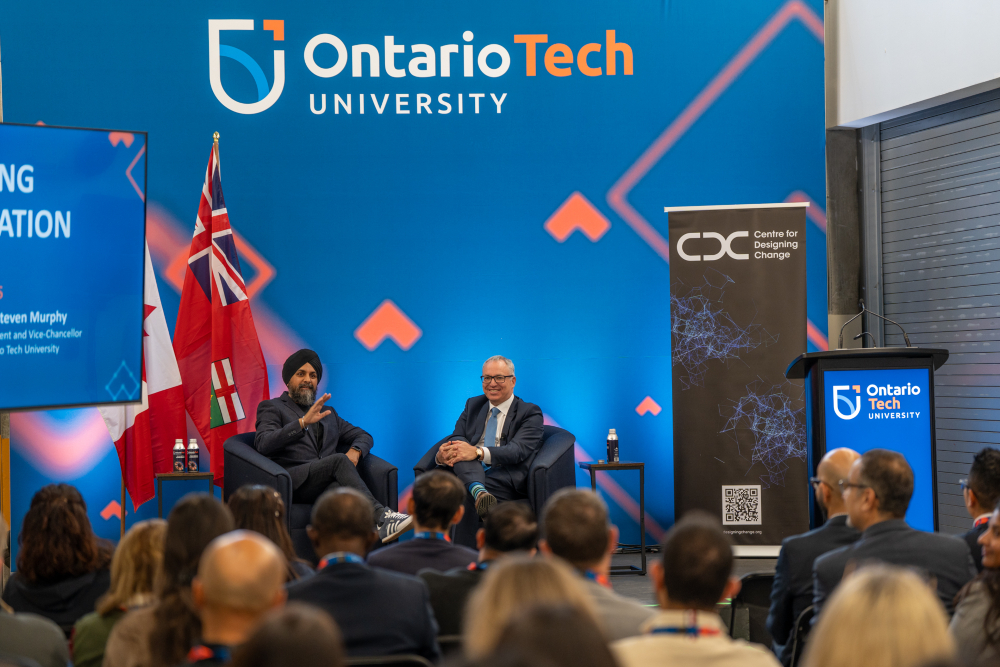
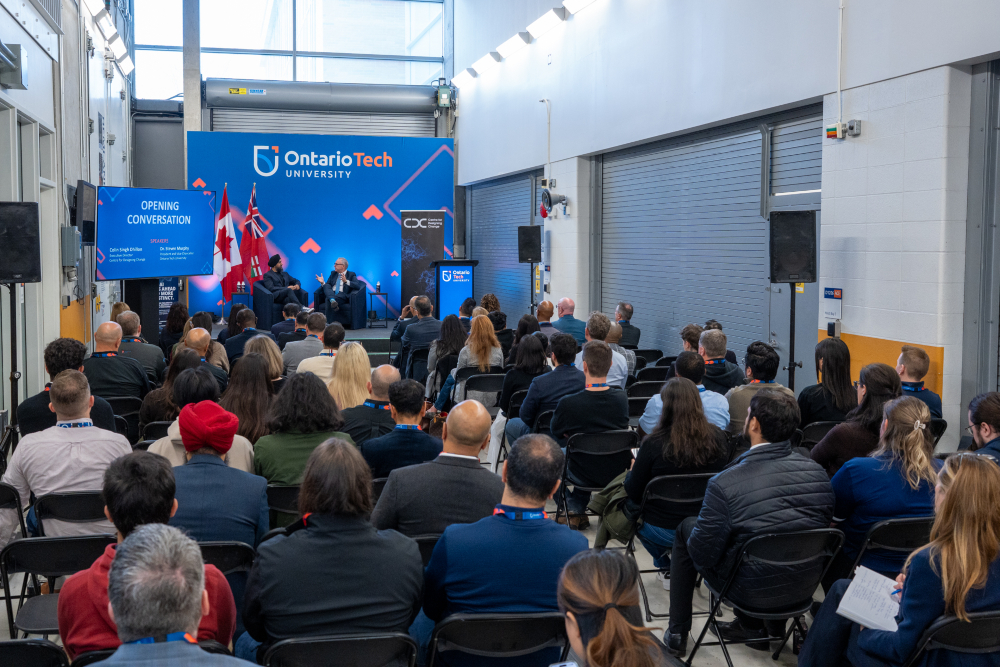
Ontario Tech University and the Centre for Designing Change (CDC) brought together industry, government, academic and community leaders at the university’s ACE Research and Testing Facility for AI in Motion: Shaping Canada’s Physical AI Future. The event included a fireside chat featuring Ontario Tech President and Vice-Chancellor Dr. Steven Murphy, and Colin Dhillon, Executive Director, CDC.
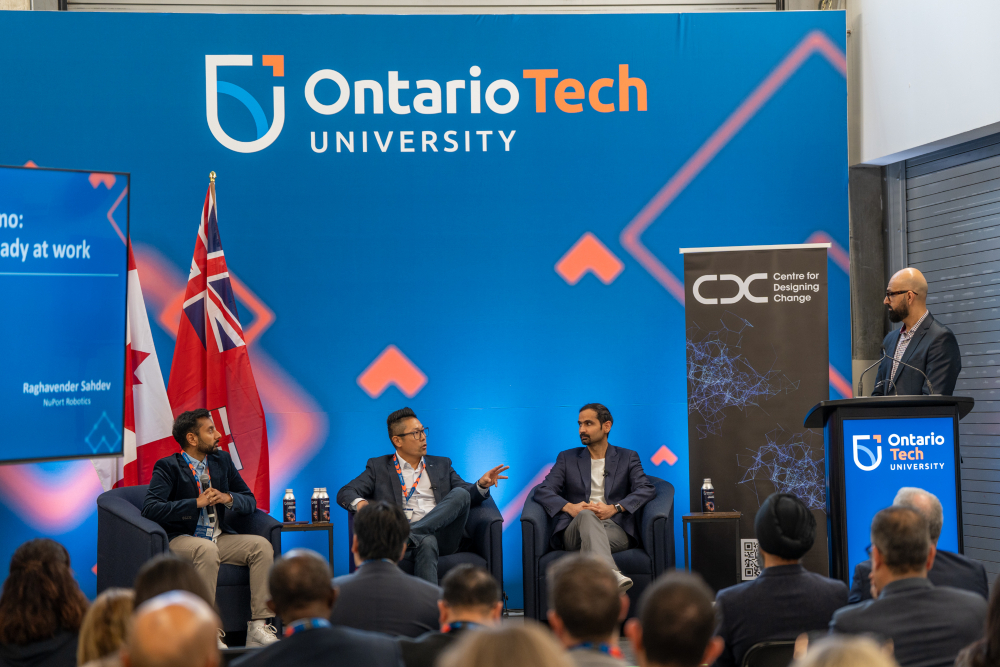
The industry partner panel, moderated by Sumit Bhatia, Managing Director, CDC, included:
- Randy Ko, Co-Founder and Chief Executive Officer (CEO), Namu Robotics
- Raghavender Sahdev, Founder and CEO, NuPort Robotics
- Vidyasagar Rajendran, Chief Science Officer, Axibo Robotics
Together, panelists discussed what it takes to put these technologies to work responsibly, from testing them and preparing workers to earn the public’s trust.
Physical AI in action
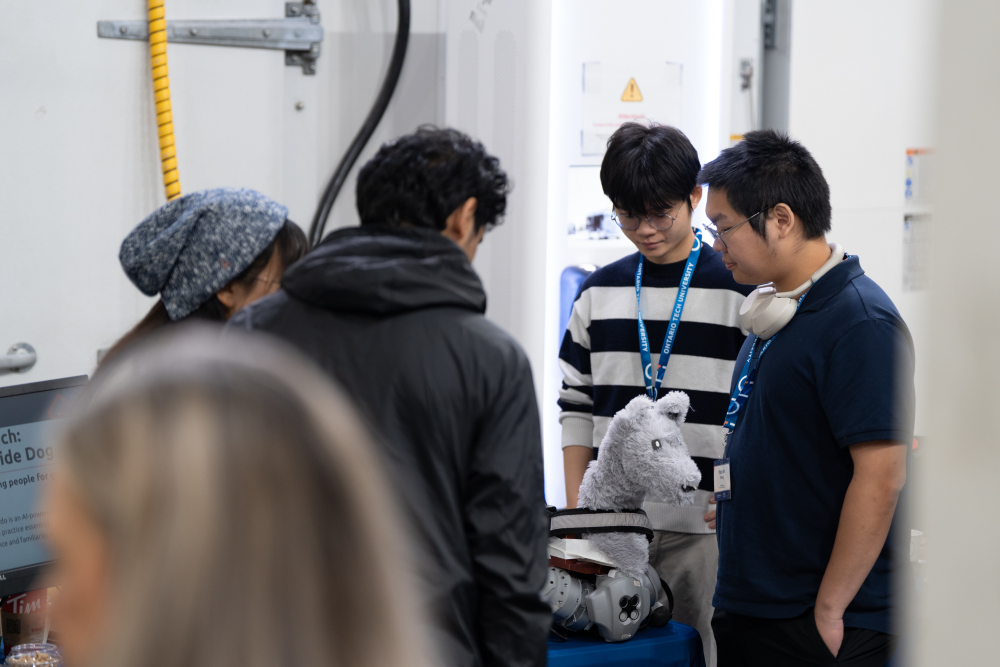
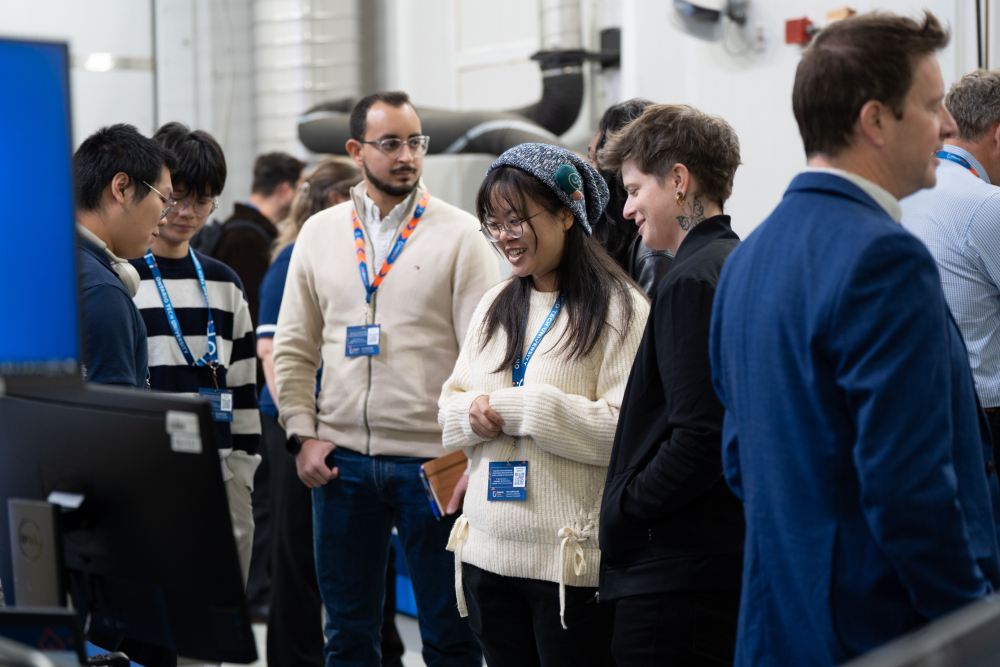
During the live demonstrations, participants saw the technology up close and spoke with the teams behind it.
Projects on display included:
- Brando, an AI-enabled robotic guide dog developed with CNIB to help people with sight loss prepare for life with a guide dog before being matched with one.
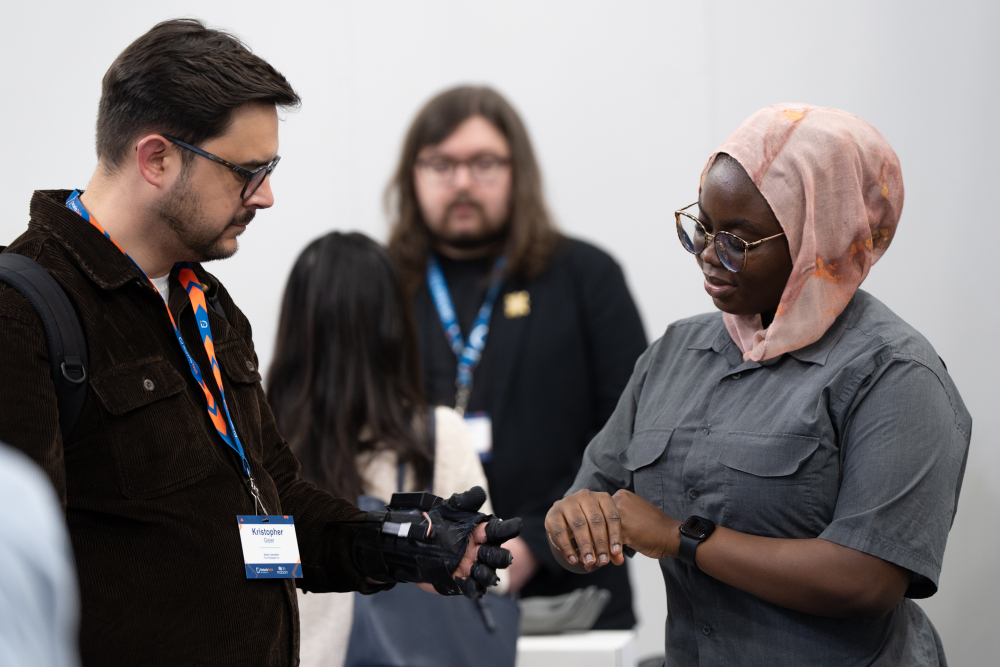
- HERO Glove, a robotic rehabilitation device designed to assist hand movement after stroke or spinal cord injury.
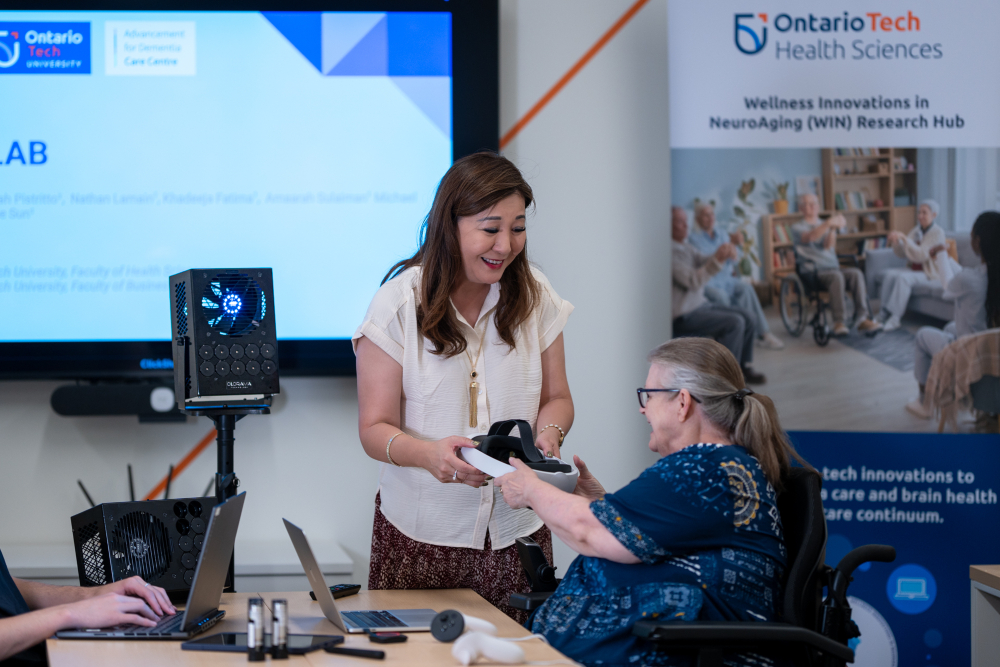
- AI-enabled virtual reality reminiscence therapy, which explores new approaches to cognitive and emotional care for people living with dementia.
- Transportation and infrastructure technologies, including autonomous drones for agricultural monitoring, autonomous vehicle research, AI-assisted highway inspection and intelligent mobility systems designed to improve safety and performance.
Building Canada’s physical AI capabilities
The event highlighted the Physical AI Centre of Excellence (PACE) Ontario, where Ontario Tech serves as the founding academic and research partner.
Through PACE Ontario, Ontario Tech connects industry partners with researchers and students to solve problems companies face. As part of that collaboration, partners can work with Ontario Tech researchers at ACE to test how new technologies perform under real-world conditions. These connections with industry also give students hands-on experience with the tools they’ll use in the workplace. This work reflects the university’s tech with a conscience ethos, which puts people and human judgment at the centre of how technology is developed and used.
Quote
“Canada has an opportunity to lead the world in physical AI, but leadership will take more than developing great technology. We need to bring industry, researchers, workers and communities together from the design phase so we can build trust around physical AI. Only with a trusting public can we deploy these technologies to solve important societal problems for people while ensuring robust algorithmic bias, data management, privacy, and redundancy safeguards.”
- Dr. Steven Murphy, President and Vice-Chancellor, Ontario Tech University
Gallery
More news
Ready for tomorrow’s careers.
We prepare our students for the fast-paced, ever-evolving world of technology.